
 Editor’s pick
Lifting & Access
Aerial work platforms: scissor lifts and boom lifts explained
Aerial work platforms safely lift people and tools to height. Learn the difference between scissor lifts, telescopic booms and articulating booms, how they are sized and how to choose.
Model guides
Popular aerial work platforms reviewed
Editor’s pick
Aerial Work Platforms compared
5 models · click a column to sort
| Genie GS-1930 | Genie | — | — |
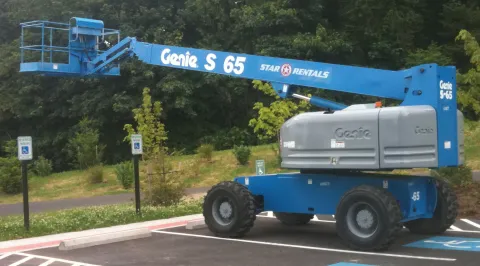
| Genie S-65 | Genie | — | — |
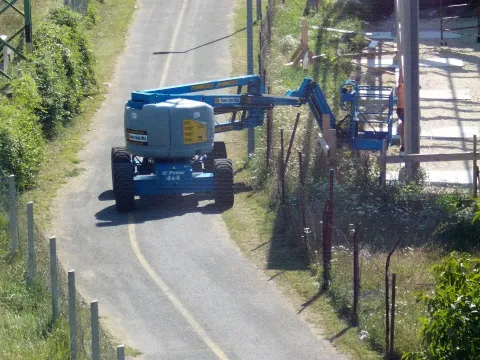
| Genie Z-45 XC | Genie | — | — |
| JLG 1930ES | JLG | — | — |
| JLG 600S | JLG | — | — |
Aerial work platforms (AWPs), also called mobile elevating work platforms (MEWPs) or simply "lifts", raise workers and their tools to height. They have largely replaced ladders and scaffolding for short-duration work at height on construction sites, in warehouses and in facility maintenance. Most AWPs are owned by rental companies.
Main types
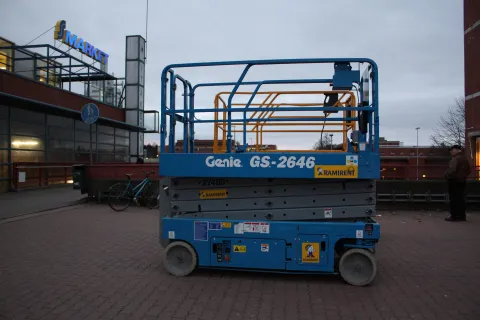
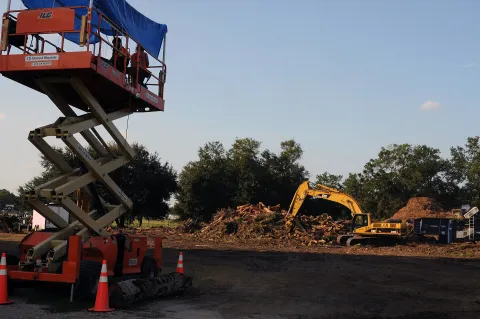
- Scissor lifts raise a large platform vertically on crossed "scissor" arms. Slab (electric) scissors work indoors on smooth floors; rough-terrain scissors have 4WD and outriggers. Typical heights: 6–18 m (19–59 ft) platform.
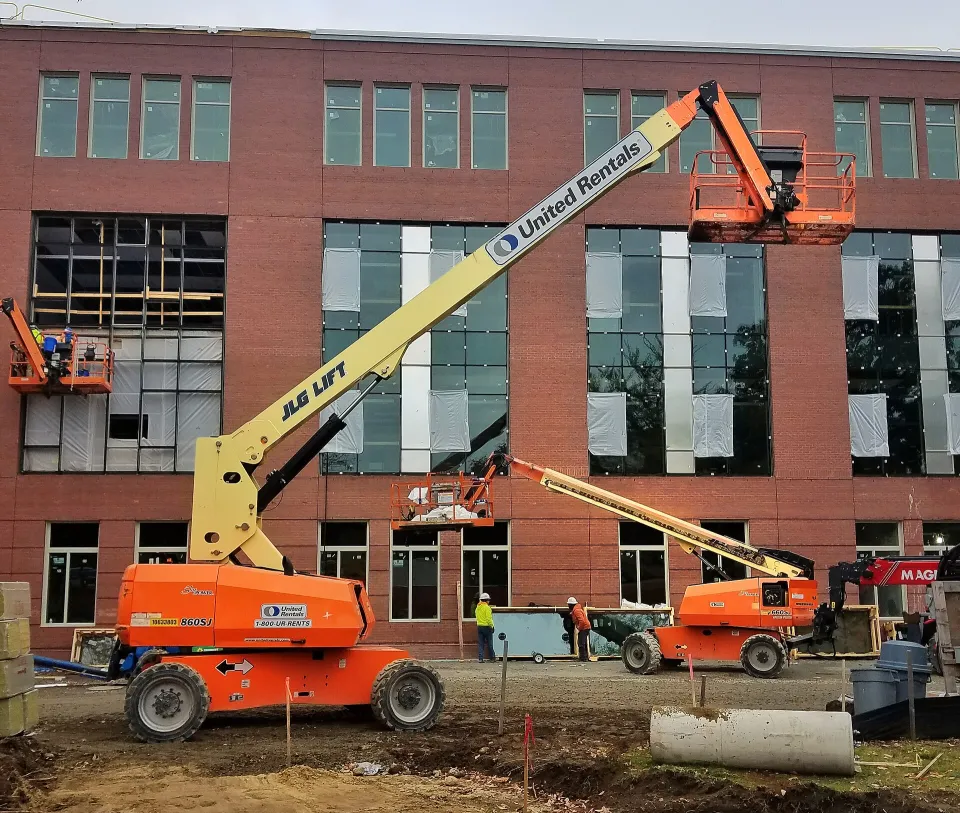
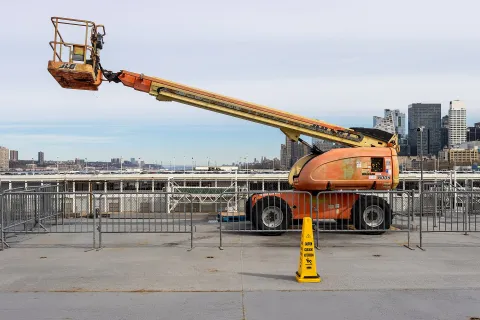
- Telescopic (straight) boom lifts offer maximum height and horizontal reach, from about 12 m to over 55 m (40–185 ft).
- Articulating (knuckle) boom lifts have jointed booms that reach up and over obstacles: ideal for working above machinery or around structures.
- Vertical mast lifts and personnel lifts for one person in tight indoor spaces.
- Trailer, truck and spider lifts for road towing and access through narrow doors.
Platform height vs working height
Manufacturers quote platform height (floor of the platform). Working height is typically about 2 m (6 ft) more, representing a worker's reach.
Capacity
Platform capacity typically ranges from 227 kg (500 lb) to 450+ kg (1,000 lb), often with a higher "restricted" capacity at reduced reach.
Electric, diesel or hybrid?
Electric machines are standard indoors; diesel dominates rough-terrain booms. Lithium-ion and hybrid models are spreading rapidly.
Safety
Operators need training (in many regions, IPAF or ANSI/CSA-compliant certification). Harnesses with lanyards are required in boom lifts. Ground conditions, wind speed and overhead power lines are the most common hazards.
Frequently asked questions
What is the difference between a scissor lift and a boom lift?
A scissor lift only goes straight up with a large platform. A boom lift reaches up and out, so it can get over obstacles and work far from the base, but with a smaller platform.
Do you need a licence to operate a scissor lift?
In most countries operators need specific training and certification for MEWPs, such as IPAF PAL cards or training compliant with ANSI A92 in North America.
Lifting & Access