
 Editor’s pick
Loaders
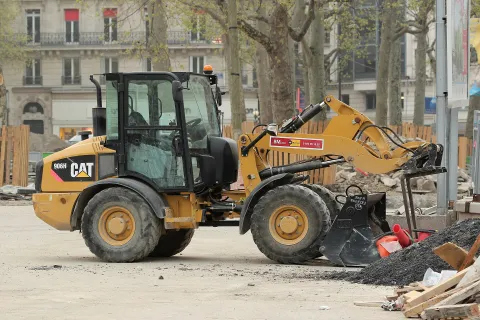
Compact wheel loaders: small, fast and gentle on surfaces
Compact wheel loaders combine the travel speed and lift of a wheel loader with the size of a skid steer, and are gentle on lawns and paving. Here is how to choose one.
Model guides
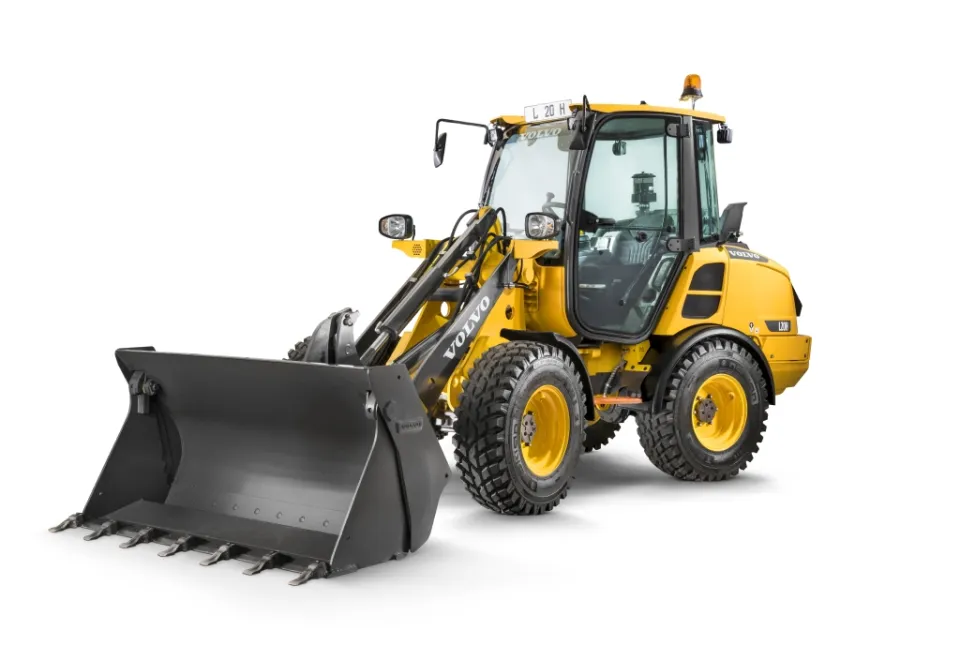
Popular compact wheel loaders reviewed
Editor’s pick
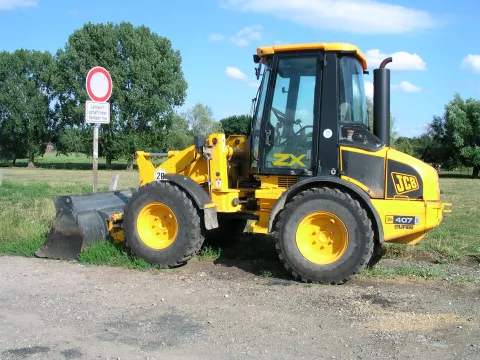
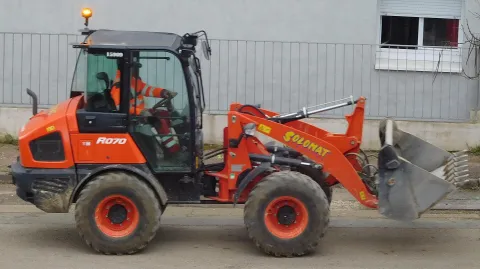
Compact Wheel Loaders compared
5 models · click a column to sort
| Caterpillar 906 | Caterpillar | 5,500 kg | 55 kW / 74 hp |
| JCB 409 | JCB | 5,000 kg | 55 kW / 74 hp |
| Kubota R070 | Kubota | 5,000 kg | — |
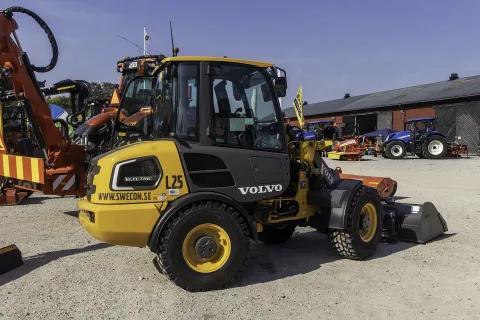
| Volvo L25 Electric | Volvo Construction Equipment | 5,000 kg | — |
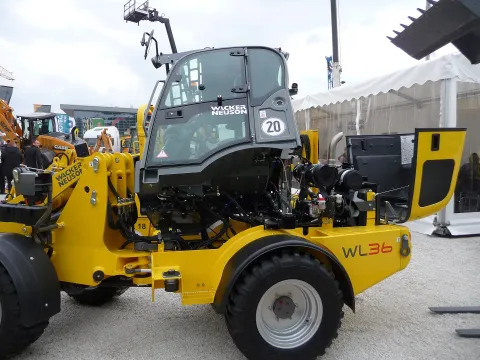
| Wacker Neuson WL52 | Wacker Neuson | 4,750 kg | — |
Compact wheel loaders weigh roughly 2–9 tonnes (4,400–20,000 lb) and have articulated steering like their bigger wheel loader cousins. They are increasingly popular with landscapers, farmers, municipalities and rental fleets.
Compact wheel loader vs skid steer
- Gentler on surfaces: articulated steering does not skid the tyres, so lawns and paving are not torn up.
- Faster travel: many compact loaders reach 20–40 km/h (12–25 mph).
- Better visibility and comfort with a mid-mounted cab.
- Higher lift height and reach with parallel or Z-bar linkages.
- Skid steers remain more compact, cheaper and more manoeuvrable in confined spaces. See our skid steer guide.
Electric compact loaders
Battery-electric compact loaders like the Volvo L25 Electric are now in series production, ideal for indoor work, city centres, stables and greenhouses.
Attachments
Buckets, forks, sweepers, snow blades, mowers and grapples fit via hydraulic quick couplers, often compatible with skid-steer attachments.
Frequently asked questions
How much can a compact wheel loader lift?
Typical compact wheel loaders have tipping loads of 2–6 tonnes (4,400–13,000 lb), depending on size and whether the machine is straight or fully articulated.
Loaders