
 Editor’s pick
Loaders
Compact track loaders: skid-steer versatility on rubber tracks
Compact track loaders bring the versatility of a skid steer to soft, wet and uneven ground. Learn how they differ, how undercarriages work and which models lead the class.
Model guides
Popular compact track loaders reviewed
Editor’s pick
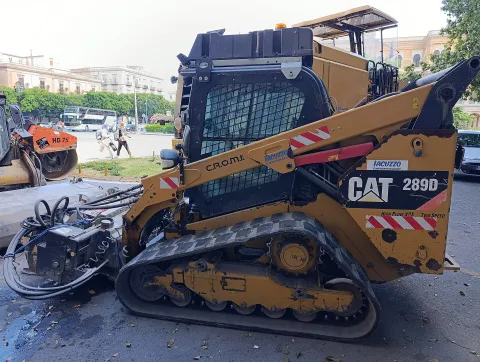
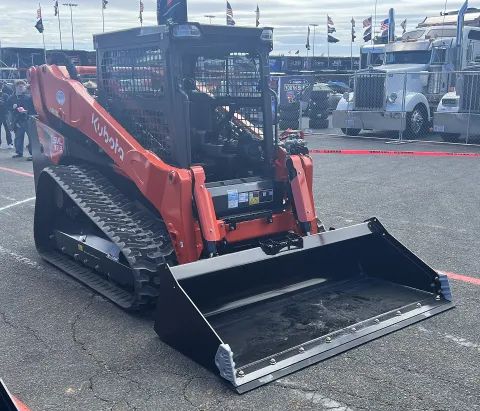
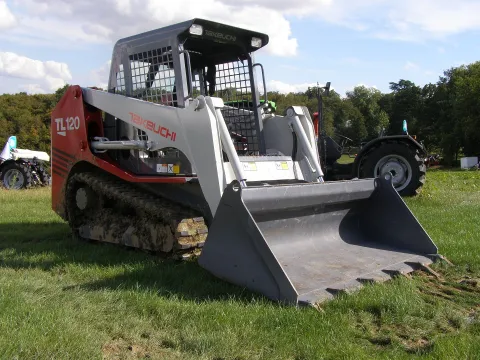
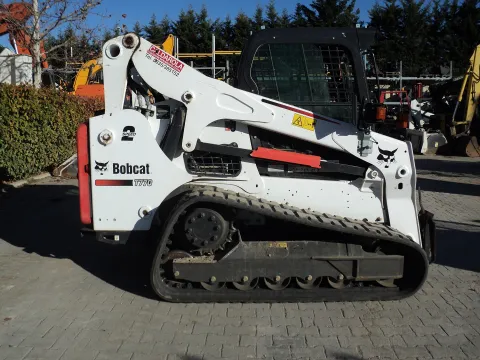
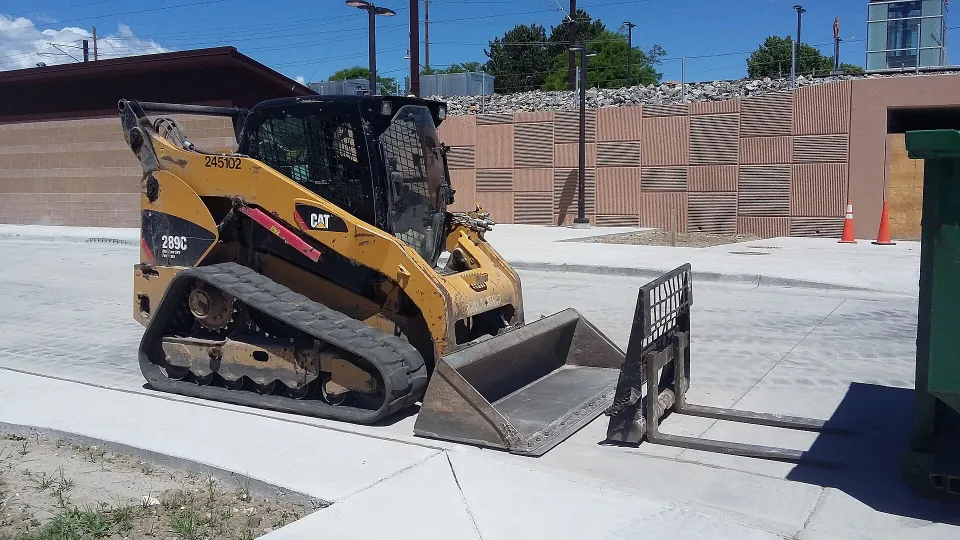
Compact Track Loaders compared
4 models · click a column to sort
| Bobcat T770 | Bobcat | 4,800 kg | 69 kW / 93 hp |
| Caterpillar 299D3 | Caterpillar | 5,200 kg | 73 kW / 98 hp |
| Kubota SVL97-2 | Kubota | 5,000 kg | 71 kW / 95 hp |
| Takeuchi TL12V2 | Takeuchi | 5,500 kg | 82 kW / 110 hp |
A compact track loader (CTL) is essentially a skid steer on rubber tracks. It uses the same lift arms, quick-attach plate and attachments, but the tracks spread the machine's weight over a much larger area. The result is better traction and flotation, lower ground disturbance and a smoother ride. In North America, CTLs now outsell wheeled skid steers.
Why choose a CTL?
- Low ground pressure, often 3–5 psi (20–35 kPa), compared with 30+ psi on tyres.
- Traction on mud, sand, snow and slopes, meaning more working days per year.
- Better grading: tracks bridge bumps, so the bucket stays level.
- Higher pushing power thanks to more traction.
Trade-offs
CTLs cost more to buy, and rubber tracks and undercarriage parts are expensive to replace. On concrete and asphalt, tracks wear quickly and wheeled skid steers are often more economical.
Rated operating capacity
For tracked loaders, ROC is calculated at 35% of tipping load (ISO 14397), compared with 50% for wheeled machines. So a CTL and a skid steer with the same ROC figure are not directly comparable.
Undercarriage designs
- Rigid undercarriages are simpler and cheaper.
- Suspended or torsion-axle undercarriages ride more smoothly and help retain material in the bucket.
- Steel-embedded rubber tracks are standard; some machines can run steel tracks for demolition.
Track tension, cleaning out packed debris and avoiding sharp turns on abrasive surfaces all extend track life.
Sizes
CTLs range from about 600 kg (1,300 lb) ROC on small machines to over 2,000 kg (4,500 lb) on the largest. The most popular range is 900–1,400 kg (2,000–3,100 lb) ROC with 70–100 hp engines.
Frequently asked questions
Is a compact track loader better than a skid steer?
On soft, wet or uneven ground, usually yes. On hard surfaces, a skid steer is cheaper to run. See our full comparison of skid steer vs compact track loader.
How long do rubber tracks last?
Typically 1,200–2,000 hours, but they can wear out much faster on abrasive surfaces like demolition debris or asphalt, or with frequent counter-rotation.
Further reading
Related articles
Buying Guides · 2 min read
Skid Steer vs Compact Track Loader: Which One Should You Buy?
Loaders