
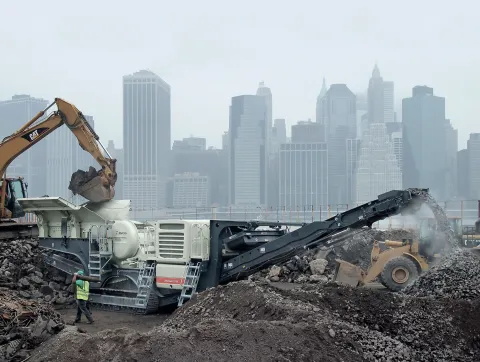
 Editor’s pick
Metso
Metso Lokotrack LT106
- Crusher
- Nordberg C106 jaw
- Feed opening
- 1,060 × 700 mm
- Capacity
- up to ≈400 t/h
Road Construction
Tracked mobile crushers turn blasted rock, demolition concrete and asphalt into aggregate on site. Learn the difference between jaw, cone and impact crushers and how a crushing train works.
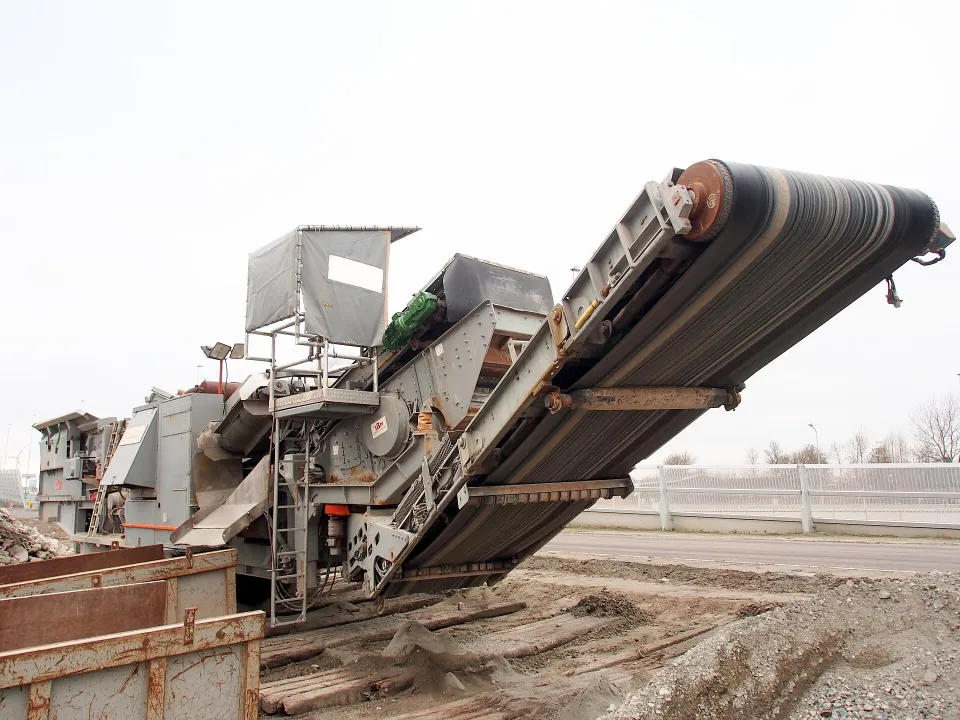
Model guides
Editor’s pick
Metso
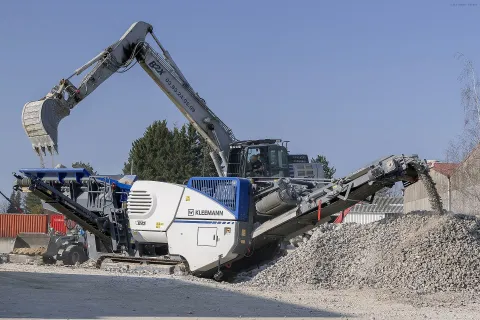
Wirtgen Group
Metso
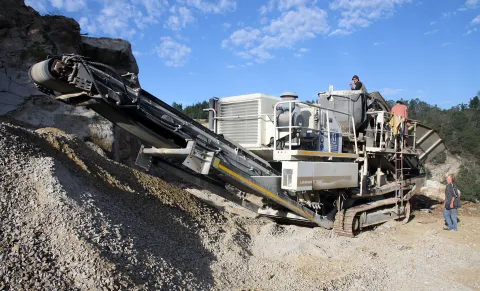
Metso
7 models · click a column to sort
| Metso Lokotrack LT106 | Metso | — | — |
| Kleemann MOBICAT MC 110i EVO2 | Wirtgen Group | — | — |
| Metso Lokotrack LT1213S | Metso | — | — |
| Metso Lokotrack LT220D | Metso | — | — |
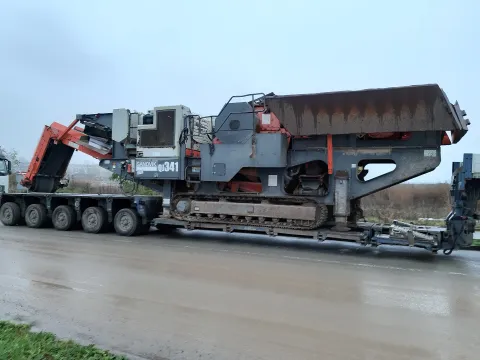
| Sandvik QJ341 | Sandvik | — | — |
| Terex Finlay 883+ | Terex | — | — |
| Terex Finlay J-1175 | Terex | — | — |
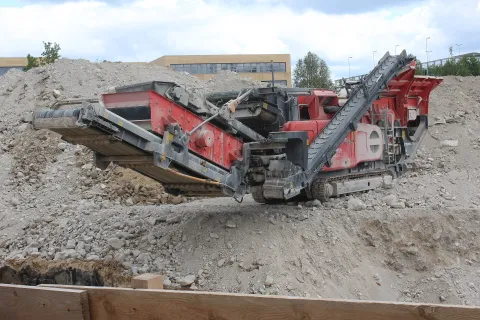
A mobile crusher is a crushing plant mounted on tracks (or wheels) with its own feeder, conveyors and power unit. It can be moved around a quarry or between job sites, so material is crushed where it lies instead of being hauled to a fixed plant.
Mobile screens separate crushed material into sizes; scalpers remove fines before or after crushing. A typical mobile "crushing train" is a jaw crusher, followed by a cone crusher, followed by a screen.
Mobile crushers are central to construction waste recycling: demolition concrete becomes road base and fill, and milled asphalt becomes recycled asphalt.
Feed opening, maximum capacity in tonnes per hour, weight and transport dimensions, and power (diesel, diesel-electric or plug-in electric).
A jaw crusher compresses rock and is best for hard, abrasive primary crushing. An impact crusher shatters material with high-speed blow bars and is ideal for recycling and producing cubical aggregate from softer rock.
Road Construction