
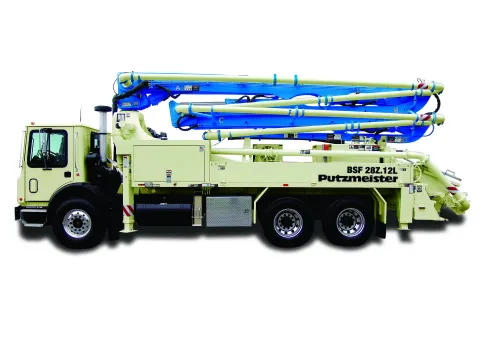
 Editor’s pick
Lifting & Access
Concrete pumps: boom pumps, line pumps and how they work
Concrete pumps place concrete exactly where it is needed, from slabs and foundations to the top of skyscrapers. Learn about truck-mounted boom pumps, trailer pumps and how to size a pump.
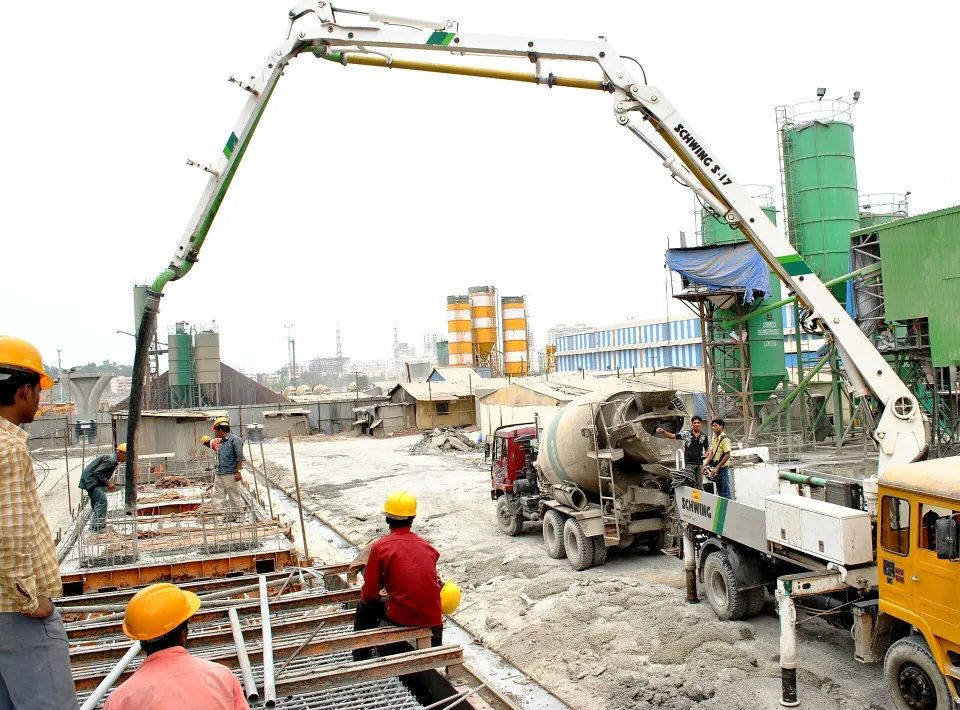
Model guides
Popular concrete pumps reviewed
Editor’s pick
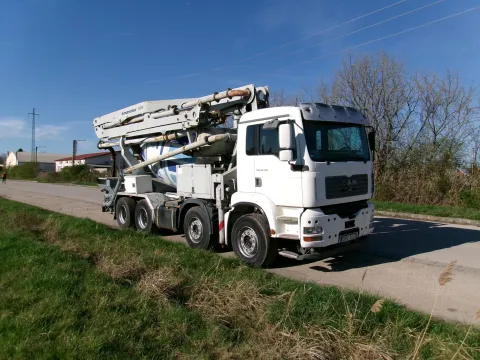
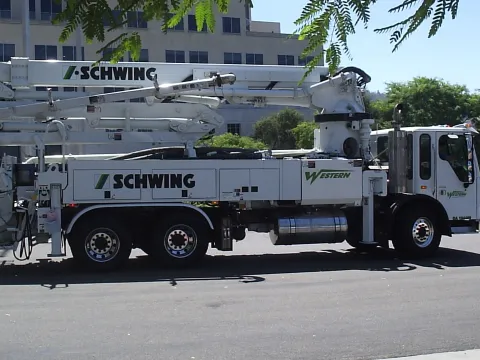
Concrete Pumps compared
6 models · click a column to sort
| Putzmeister M 38-5 | Putzmeister | — | — |
| Putzmeister BSA 1409 D | Putzmeister | — | — |
| Putzmeister M 63-5 | Putzmeister | — | — |
| Schwing S 36 X | Schwing | — | — |
| Schwing S 47 SX | Schwing | — | — |
| Schwing S 61 SX | Schwing | — | — |
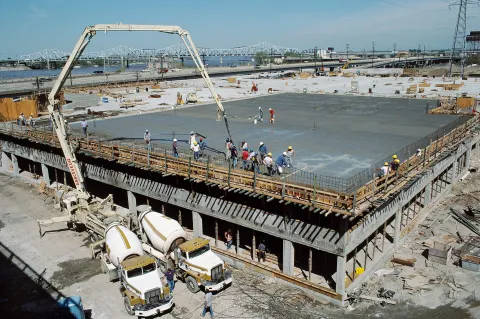
A concrete pump moves fresh concrete from a truck mixer to the point of placement through a pipeline. Pumping is faster, needs fewer workers and allows concrete to be placed where cranes and buckets cannot reach.
Types of concrete pumps
- Truck-mounted boom pumps carry a folding, multi-section placing boom on a truck chassis. Boom lengths range from about 20 m to over 70 m (65–230 ft). The model number usually shows the vertical reach: an M 38 reaches about 38 m.
- Trailer (line) pumps are towed to site and push concrete through a pipeline laid by hand. They are used for smaller jobs, long horizontal distances and high-rise buildings with fixed pipelines.
- Stationary high-pressure pumps feed concrete hundreds of metres up skyscrapers and through tunnels.
- Truck mixer pumps combine a mixer drum with a small boom.
How the pump works
Two hydraulic cylinders alternately draw concrete from a hopper and push it into the line. A switching valve (an S-valve or rock valve) directs the flow between cylinders. Output is quoted in m³/h (yd³/h); typical boom pumps deliver 100–200 m³/h.
Choosing a pump
Consider the required vertical and horizontal reach, the outrigger footprint available on site, the output needed for the pour, and the concrete mix (aggregate size and slump).
Frequently asked questions
What does M 38 mean on a concrete pump?
On Putzmeister and many other boom pumps, the number indicates the approximate vertical reach of the placing boom in metres, so an M 38 reaches roughly 38 m (125 ft).
Lifting & Access