
 Editor’s pick
Caterpillar
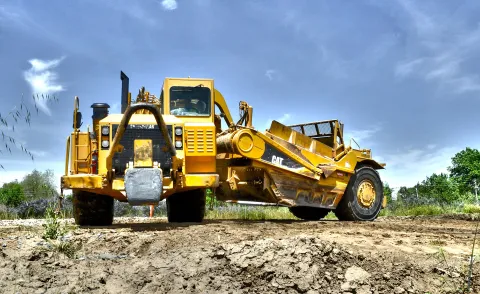
Caterpillar 621K
- Heaped capacity
- 18 m³
- Rated load
- 22,000 kg
- Configuration
- Single engine, open bowl
Earthmoving
A scraper cuts, loads, hauls and spreads soil in a single machine. Learn about single-engine, twin-engine, elevating and push-pull scrapers and when they beat trucks and excavators.
Model guides
Editor’s pick
Caterpillar
Caterpillar
3 models · click a column to sort
| Caterpillar 621K | Caterpillar | — | — |
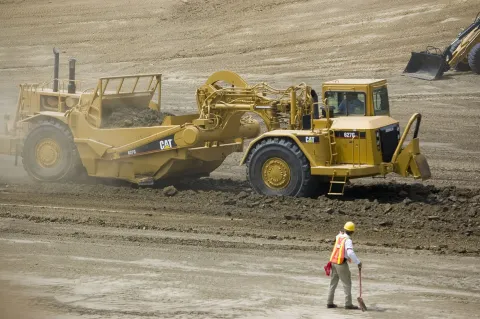
| Caterpillar 627K | Caterpillar | — | — |
| Caterpillar 657G | Caterpillar | — | — |
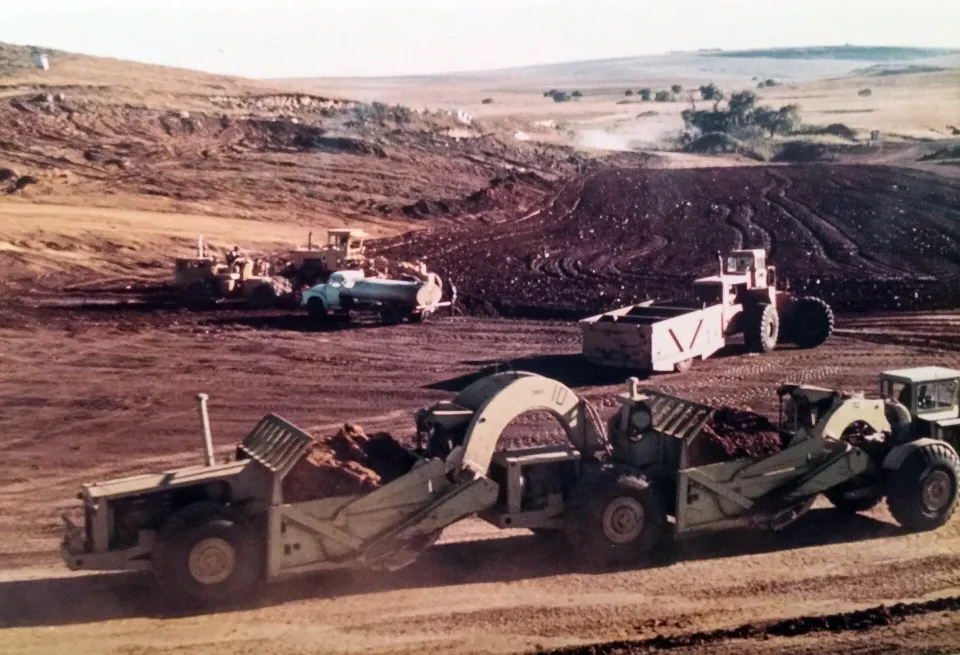
A wheel tractor scraper is a self-propelled earthmover with a large bowl between its axles. As it drives forward, the bowl's cutting edge slices a thin layer of soil, filling the bowl. The scraper then hauls the load at speed and spreads it in an even layer at the fill area. One machine does the work of an excavator, a truck and a dozer.
Today the market is dominated by Caterpillar, the only major manufacturer still offering a full range of self-propelled scrapers. Tractor-towed (pull) scrapers are also common in agriculture and land levelling.
Scrapers are most efficient for large-volume earthmoving over haul distances of roughly 150–1,500 m (500–5,000 ft): highway construction, dams, land development and mine reclamation. In suitable soils they offer one of the lowest costs per cubic metre of any earthmoving method.
Larger excavators, articulated trucks and GPS-controlled dozers have taken over many jobs, especially where material is rocky or projects are smaller. Scrapers remain the most economical choice on big projects with suitable soils and medium haul distances.
Earthmoving