Skip to content
WorksiteMachines

Earthmoving

Drill rigs for quarrying, mining and tunnelling

Drill rigs make the blast holes that break rock in quarries, mines and tunnels. Learn the difference between top-hammer, down-the-hole and rotary drilling, and surface vs underground rigs.
Alexey Puzanov ByAlexey Puzanov Updated 1 min read
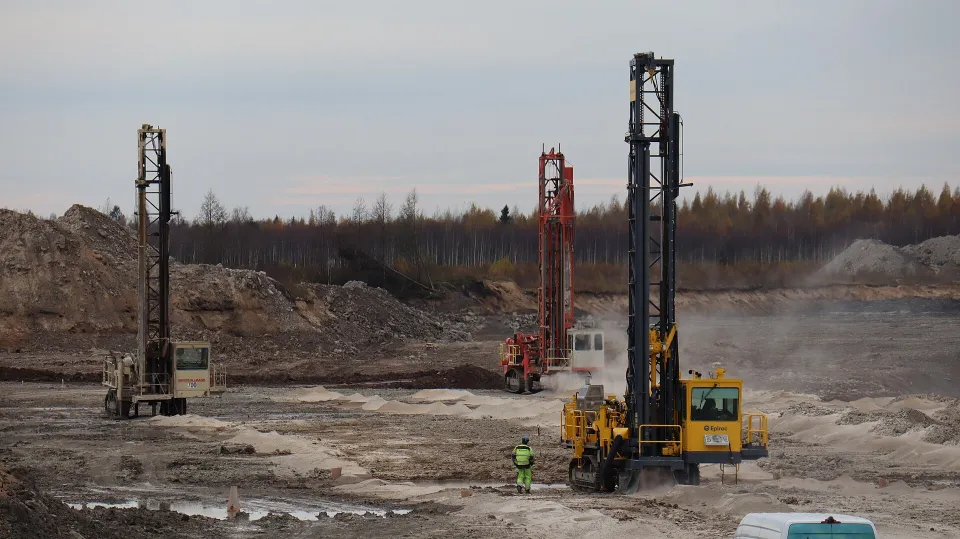
Surface drill rigs on a quarry bench

Photo: Siim Roov, CC BY-SA 4.0 · license

Model guides

Popular drill rigs reviewed

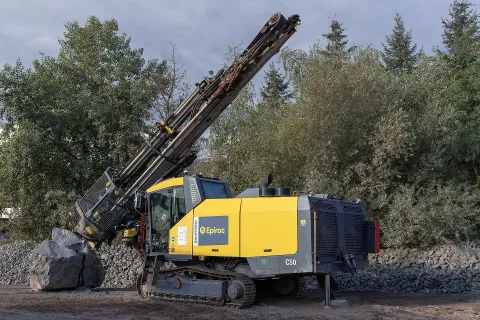
Epiroc SmartROC surface drill rig (C50 model pictured) Editor’s pick

Epiroc

Epiroc SmartROC D65

Hole diameter
110+ mm
Drilling method
Down-the-hole
Automation
Rod handling, hole navigation, auto drilling
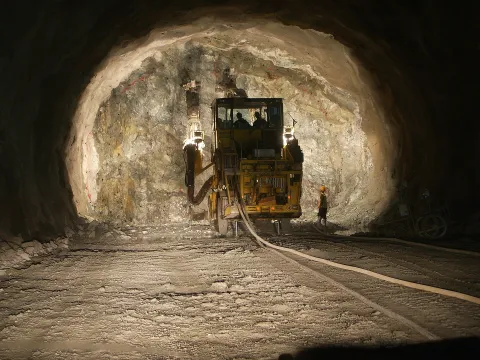
Face drilling jumbo working in a tunnel

Epiroc

Epiroc Boomer S2

Booms
2
Application
Underground face drilling
Coverage area
up to ≈45 m²

Sandvik

Sandvik DD422i

Booms
2
Application
Underground mine development
Automation
Automated drilling cycle
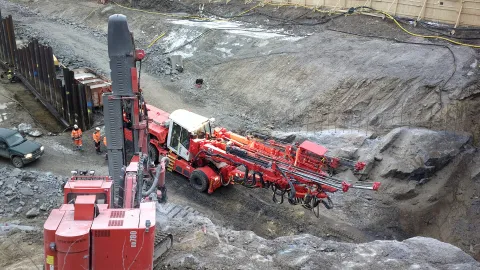
Sandvik surface drill rig on a tunnel construction site in Helsinki

Sandvik

Sandvik DP1500i

Hole diameter
89+ mm
Drilling method
Top hammer
Series
Pantera

Sandvik

Sandvik DR412i

Hole diameter
152+ mm
Drilling method
Rotary / DTH

Drill Rigs compared

6 models · click a column to sort

Epiroc SmartROC D65 Epiroc — —
Epiroc Boomer S2 Epiroc — —
Epiroc FlexiROC T45 Epiroc — —
Sandvik DD422i Sandvik — —
Sandvik DP1500i Sandvik — —
Sandvik DR412i Sandvik — —

Rock drill rigs drill holes for explosives (blasting), rock bolts, anchors and exploration. They are essential in quarries, open-pit mines, underground mines, road cuttings and tunnels.

Drilling methods

  • Top-hammer drilling: a hydraulic rock drill on the feed beam hammers and rotates the drill string. Fast in small and medium holes, typically 35–127 mm (1.4–5 in).
  • Down-the-hole (DTH): the hammer sits at the bottom of the hole, driven by compressed air. Straighter holes and better performance in larger diameters (90–254 mm / 3.5–10 in).
  • Rotary drilling: heavy pull-down force and rotation with tricone bits; used for large blastholes (150–311 mm / 6–12 in+) in big open-pit mines.

Surface vs underground rigs

  • Surface drill rigs are tracked crawlers with a boom and feed, often with an enclosed cab and on-board compressor.
  • Underground drill rigs (jumbos) have one to three booms for drilling the face of a tunnel or mine drift, plus rigs for rock bolting and long-hole production drilling.

Automation

Modern rigs offer automated rod handling, hole navigation using GNSS, and fully autonomous drilling of a pre-planned pattern, improving accuracy and safety.

Frequently asked questions

What is the difference between top-hammer and DTH drilling?

Top-hammer rigs hit the drill string from the top and are fastest in smaller holes. Down-the-hole hammers work at the bottom of the hole, producing straighter, larger-diameter holes with less energy loss.

Earthmoving

Related equipment types