
 Editor’s pick
Forestry
Forestry machines: harvesters, forwarders and how cut-to-length logging works
Modern logging relies on two machines: the harvester that fells and processes trees, and the forwarder that carries the logs out. Learn how cut-to-length and full-tree systems work and which machines lead.
Model guides
Popular forestry machines reviewed
Editor’s pick
Forestry Machines compared
4 models · click a column to sort
| Ponsse Scorpion King | Ponsse | 22,000 kg | 210 kW / 282 hp |
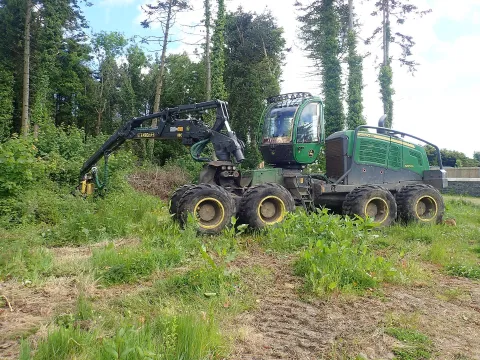
| John Deere 1270G | John Deere | — | 193 kW / 259 hp |
| Ponsse Buffalo | Ponsse | — | 150 kW / 201 hp |
| Ponsse Ergo | Ponsse | — | 210 kW / 282 hp |
Forestry machines fell, process and transport trees. Two main logging systems dominate:
- Cut-to-length (CTL): a harvester fells the tree, delimbs it and cuts it into logs in the forest; a forwarder then carries the logs to the roadside. CTL is standard in Scandinavia and Europe and growing worldwide because it is gentle on the forest floor.
- Full-tree / whole-tree: a feller buncher cuts trees, a skidder drags them to a landing, and a processor delimbs and cuts them. Common in North America and the southern hemisphere.
Harvesters
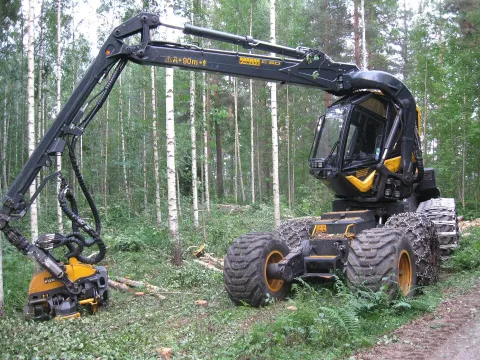
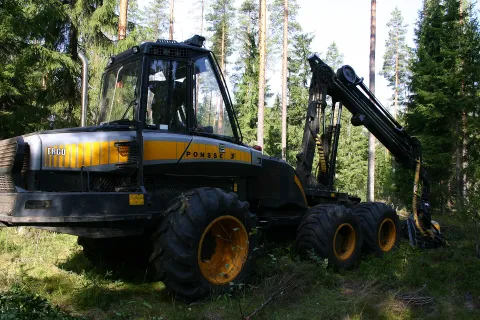
A harvester has a long hydraulic crane with a harvester head that grips the tree, cuts it with a chainsaw bar, feeds it through delimbing knives with rollers, measures its length and diameter and cuts logs to optimised lengths. On-board computers optimise each log for value using the StanForD standard.
Forwarders
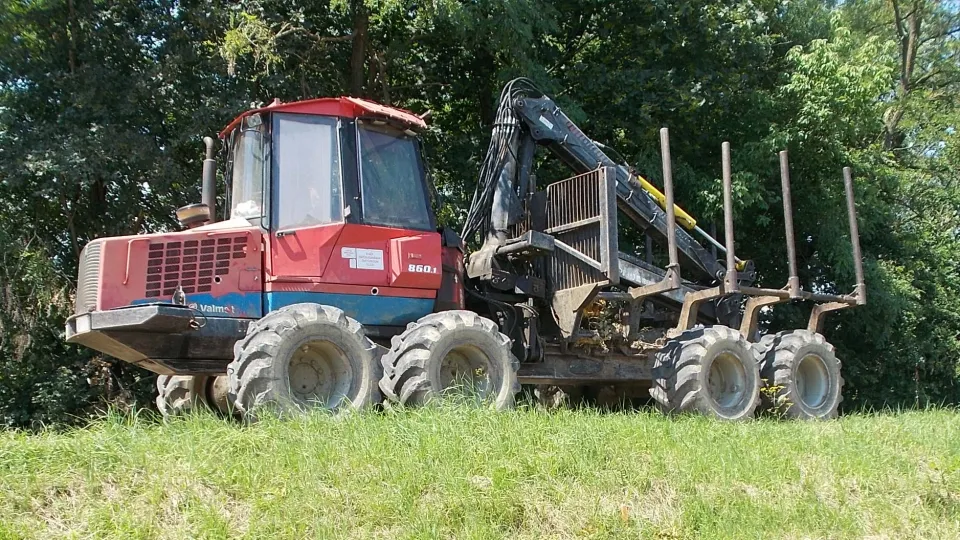
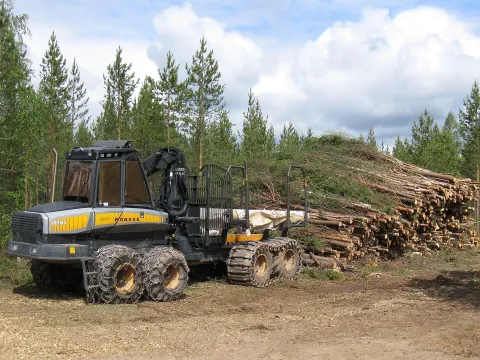
Forwarders have a loading crane and a bunk that carries 8–20 tonnes of logs. Large wheels with bogie axles and optional tracks spread the load on soft ground.
6-wheel vs 8-wheel
Eight-wheel harvesters and forwarders have better stability and lower ground pressure on steep slopes and soft soils, while six-wheel machines are lighter and more agile.
Frequently asked questions
What is the difference between a harvester and a forwarder?
A harvester cuts down and processes trees into logs. A forwarder collects the logs and carries them to the roadside.