
 Editor’s pick
Vermeer
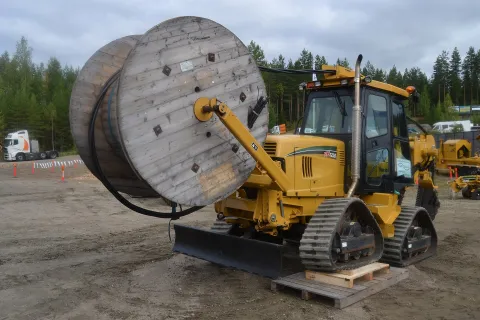
Vermeer RTX1250
- Power
- 121 hp
- Undercarriage
- Rubber tracks
- Attachments
- Trencher, vibratory plow, rockwheel, backfill blade
Earthmoving
Trenchers cut narrow, consistent trenches for cables, pipes and drainage faster than any excavator. Learn the main types, sizes and when a trencher beats a digger.
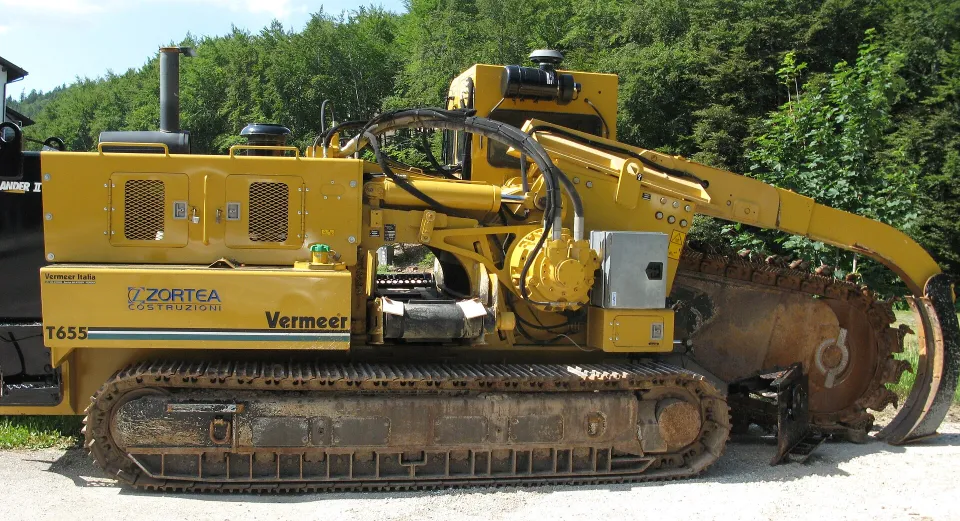
Photo: Les Meloures at lb.wikipedia, CC BY-SA 3.0 lu · license
Model guides
Editor’s pick
Vermeer
Vermeer
3 models · click a column to sort
| Vermeer RTX1250 | Vermeer | — | 90 kW / 121 hp |
| Vermeer RTX750 | Vermeer | — | 55 kW / 74 hp |
| Vermeer T655III | Vermeer | — | 195 kW / 261 hp |
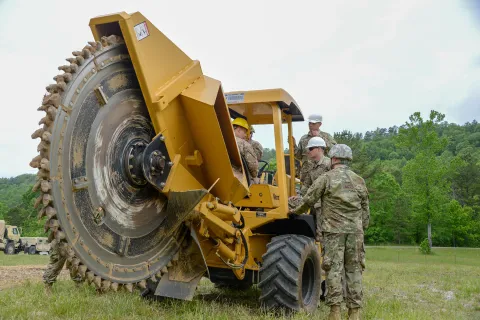
A trencher digs a narrow trench in one continuous pass. Instead of a bucket, it uses a digging chain with teeth (like a giant chainsaw) or a rock wheel with carbide teeth. Spoil is carried out by an auger and placed beside the trench.
On long runs, a trencher is much faster than an excavator, produces a neat, consistent trench of exactly the required width (minimising backfill), and causes less surface disruption.
Plows pull cable or flexible pipe directly into the ground without an open trench, ideal for telecom and irrigation.
Compact ride-on trenchers typically dig 0.9–1.8 m (3–6 ft); large track trenchers can exceed 2.5 m (8 ft).
Earthmoving