
 Editor’s pick
Lifting & Access
Telehandlers: lifting, reaching and placing loads
Telescopic handlers lift pallets to roofs, load trucks over obstacles and replace cranes for many jobs. Learn about construction, rotating and agricultural telehandlers and how to read a load chart.
Model guides
Popular telehandlers reviewed
Editor’s pick
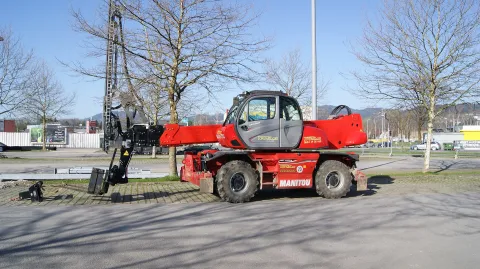
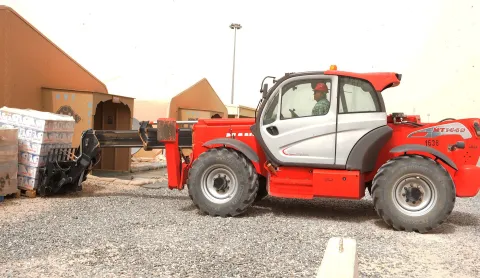
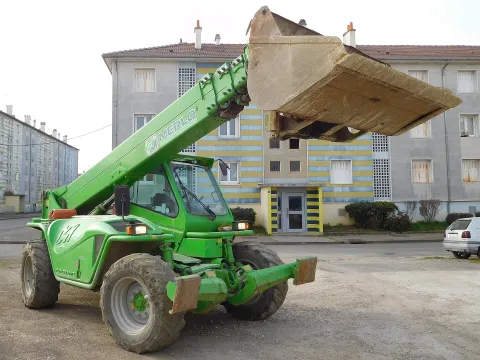
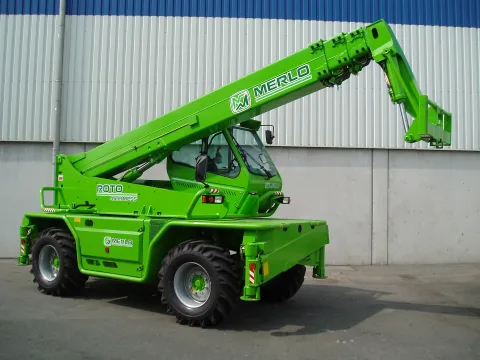
Telehandlers compared
8 models · click a column to sort
| JCB 540-170 Loadall | JCB | 11,800 kg | 81 kW / 109 hp |
| JLG 1055 | JLG | — | 74 kW / 99 hp |
| Manitou MLT 737 | Manitou | — | 90 kW / 121 hp |
| Manitou MRT 2550 | Manitou | 17,000 kg | — |
| Manitou MT 1840 | Manitou | 12,000 kg | — |
| Merlo P40.17 | Merlo | — | — |
| Merlo Roto 50.35 | Merlo | — | — |
| Merlo TF42.7 | Merlo | — | — |
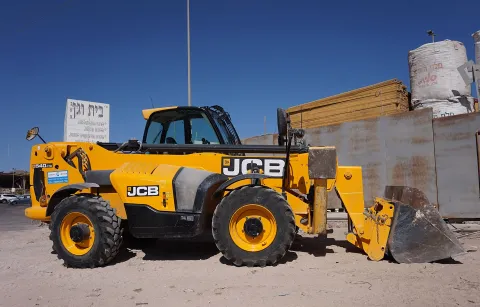
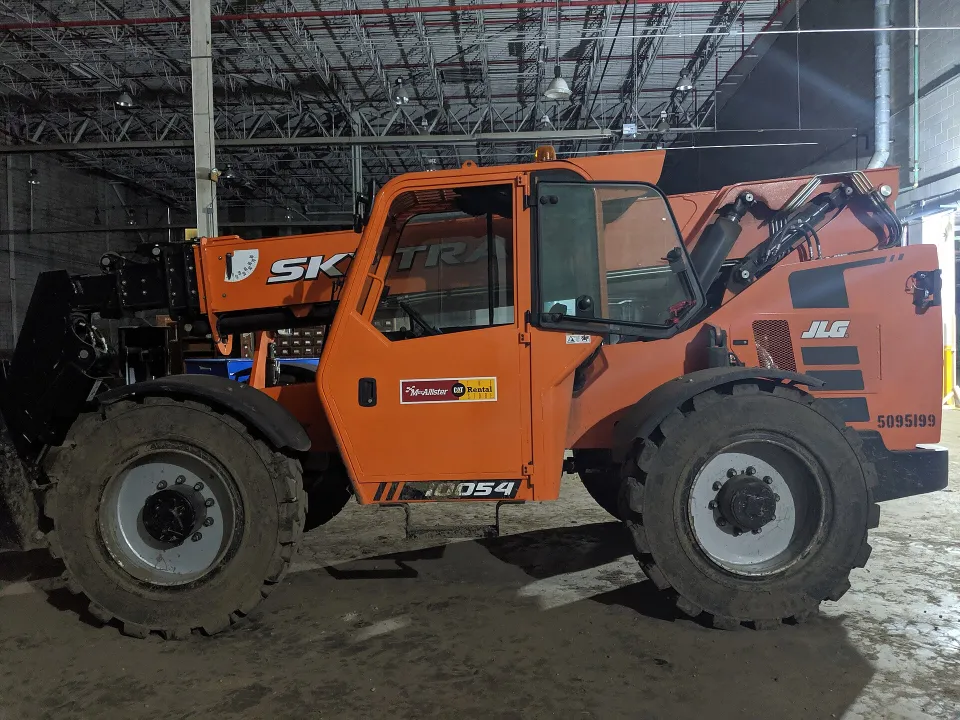
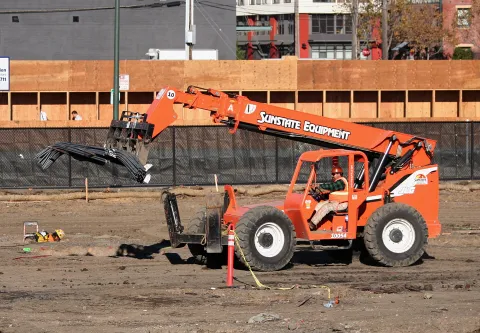
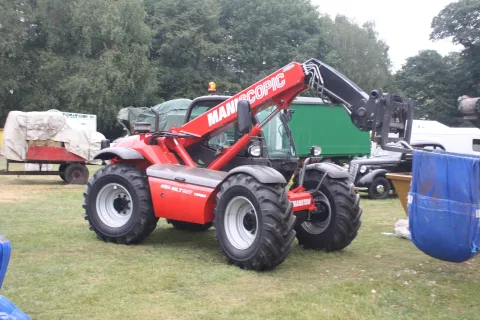
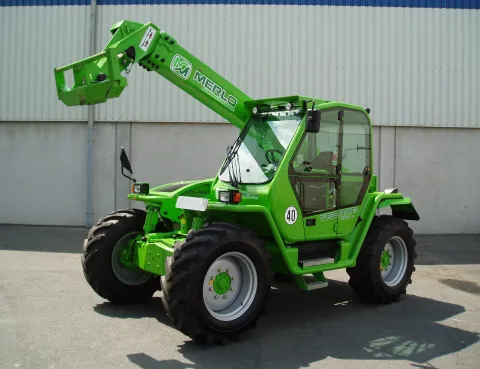
A telehandler (telescopic handler, or reach forklift) is a four-wheel-drive machine with a telescopic boom that can lift loads high and forward. With pallet forks it places materials onto upper floors and roofs; with buckets it loads; with a jib or winch it lifts like a small crane; and with a certified platform it can carry people.
JCB introduced the first modern telehandler, the Loadall, in 1977.
Types of telehandlers
- Construction telehandlers: typically 3–5 t (6,600–11,000 lb) capacity and 12–18 m (40–60 ft) lift height. The most common type on building sites.
- High-capacity telehandlers: 6–12 t+ for heavy industry, mining and steel.
- Rotating telehandlers (roto): the boom sits on a 360-degree slewing upper structure with outriggers, combining telehandler, crane and work platform in one machine. Lift heights reach 20–35 m (65–115 ft).
- Agricultural telehandlers: shorter, faster machines with lift heights around 6–9 m (20–30 ft) for loading feed, bales and grain.
- Compact telehandlers: under 2.5 m (8 ft) tall for barns and tight sites.
Reading a load chart
A telehandler's capacity falls dramatically as the boom extends forward. A 4-tonne, 17-metre machine might lift only around 1 tonne at full forward reach. Always use the load chart in the cab, and remember that most modern telehandlers have load moment indicators that warn the operator or cut out boom functions to prevent tipping.
Steering modes
Most telehandlers offer two-wheel steer, four-wheel steer and crab steer, giving excellent manoeuvrability on tight sites.
Choosing a telehandler
Decide on the highest placement height and heaviest load at the reach you actually need. Consider frame levelling for uneven ground, stabilisers for maximum height, and which attachments you will use. Operators normally need specific training and certification.
Frequently asked questions
What is the difference between a telehandler and a forklift?
A forklift lifts vertically on a mast and is designed for smooth floors. A telehandler has a telescopic boom that reaches forward and up, and has four-wheel drive and large tyres for rough terrain.
Can a telehandler lift people?
Only with a certified man-basket or work platform approved by the manufacturer for that model, and only where local regulations allow it.
Lifting & Access