
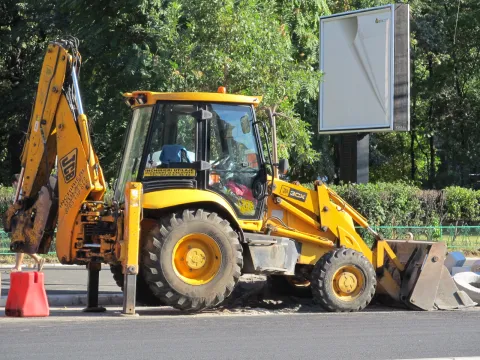
 Editor’s pick
Loaders
Backhoe loaders: two machines in one
A backhoe loader digs with one end and loads with the other, then drives itself to the next job. Here is why it remains the favourite of utilities and municipalities, and how to choose one.
Model guides
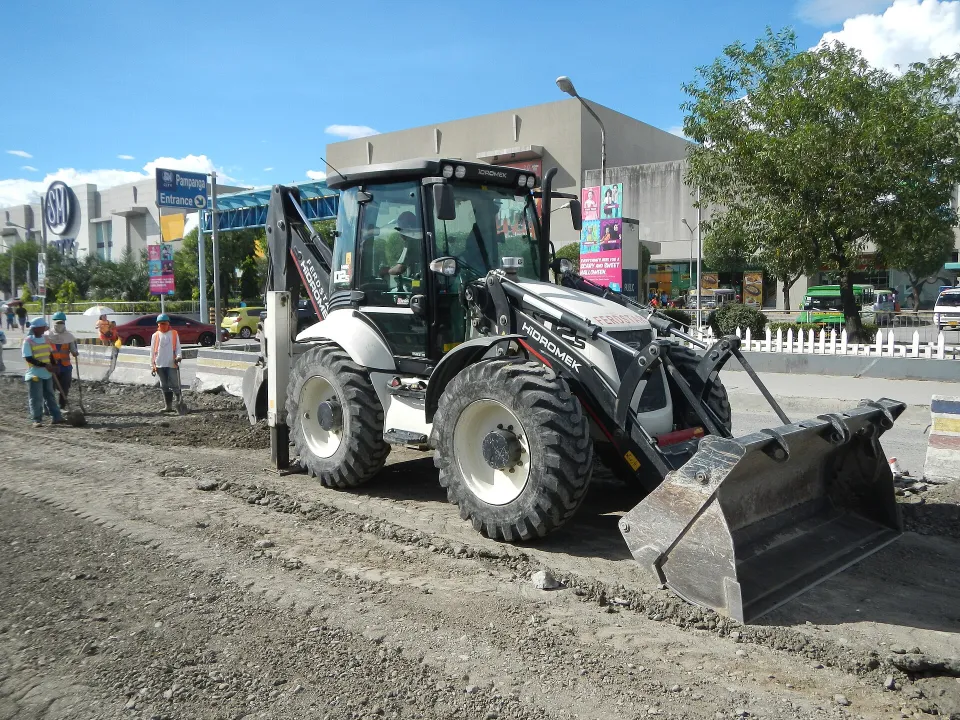
Popular backhoe loaders reviewed
Editor’s pick
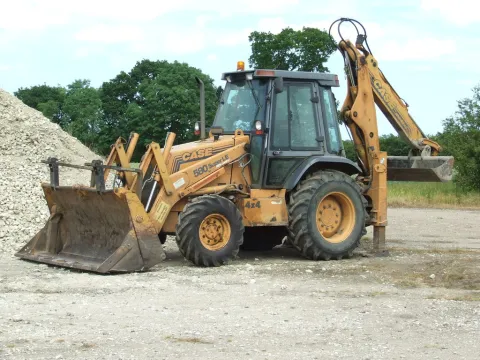
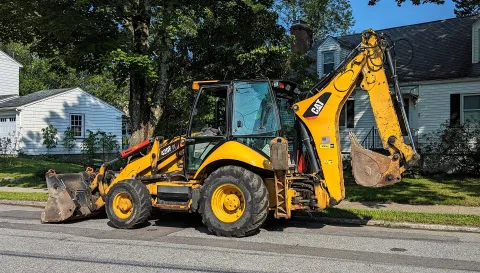
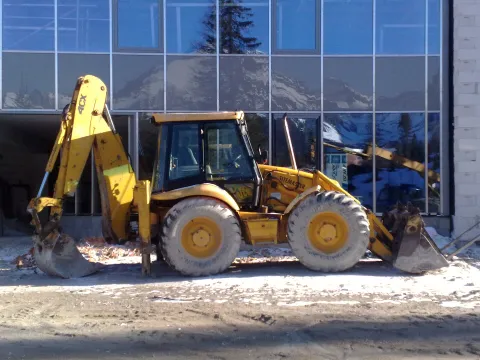
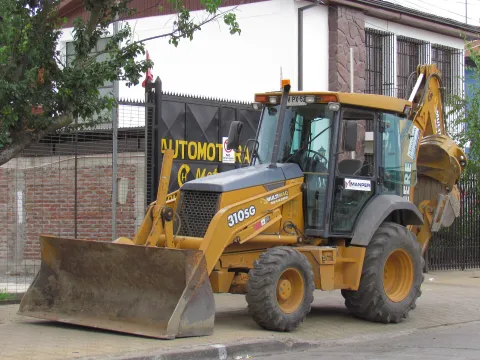
Backhoe Loaders compared
5 models · click a column to sort
| JCB 3CX | JCB | 8,400 kg | 68 kW / 91 hp |
| CASE 580 Super N | Case | 7,750 kg | 72 kW / 97 hp |
| Caterpillar 420 | Caterpillar | 8,850 kg | 70 kW / 94 hp |
| JCB 4CX | JCB | 9,000 kg | 81 kW / 109 hp |
| John Deere 310 P-Tier | John Deere | 7,500 kg | 74 kW / 99 hp |
A backhoe loader combines a tractor, a front loader and a digging arm (backhoe) at the rear. The operator turns the seat around to dig. Because it runs on large rubber tyres and can travel at 40 km/h (25 mph) or more, a backhoe can drive between jobs without a trailer. That combination makes it the classic machine for utilities, councils, small builders and farms.
How a backhoe is used
- Front loader: loading trucks, backfilling trenches, moving material, clearing snow; often with a multipurpose "4-in-1" bucket that can clamp, doze and grade.
- Backhoe: digging trenches and foundations, laying pipes, breaking concrete with a hammer.
- Stabilisers lower to the ground when digging to keep the machine steady.
Key features
- Centre-mount vs side-shift. Most North American backhoes have a centre-mounted boom; side-shift designs, common in Europe, slide the boom across the rear for digging against walls.
- Extendable dipper (extendahoe) adds roughly 1 m (3–4 ft) of reach and depth.
- Four-wheel drive and all-wheel steer improve traction and manoeuvrability.
- Ride control smooths travel with a loaded bucket.
- Pilot or mechanical controls: joystick pilot controls are easier on the operator; mechanical levers are cheaper and simple to maintain.
Typical specifications
Most "standard" backhoe loaders weigh 7–9 tonnes (15,000–20,000 lb), have 70–110 hp engines, dig 4.3–5.9 m (14–19 ft) deep and carry a 1.0–1.3 m³ (1.3–1.7 yd³) loader bucket.
Backhoe vs mini excavator
A mini excavator digs more precisely and swings 360 degrees, but cannot load trucks efficiently or drive on roads. A backhoe is less precise but much more versatile across a working day. Many contractors run both.
Price
New standard backhoe loaders typically cost about US$100,000–160,000 depending on brand and options.
Frequently asked questions
How deep can a backhoe dig?
Most standard backhoe loaders dig about 4.3–4.6 m (14–15 ft) deep; with an extendable dipper they can reach 5.5–6 m (18–20 ft).
Why is a backhoe called a JCB in the UK?
JCB built Europe's first backhoe loader in 1953 and has dominated the UK market ever since, so its name became a generic term.
Loaders