A Short History of the Excavator: From Steam Shovels to Smart Machines
How did we get from the 1830s steam shovel to today’s GPS-guided hydraulic excavator? A short history of the most important machine on the jobsite.

The steam shovel (1830s–1930s)
The American engineer William Otis patented the steam shovel in 1839. Mounted on rails, these machines used cables and a steam engine to swing a bucket on a boom. Steam shovels dug the Panama Canal in the early 20th century, where around a hundred of them worked on the excavation.
Cable shovels and draglines
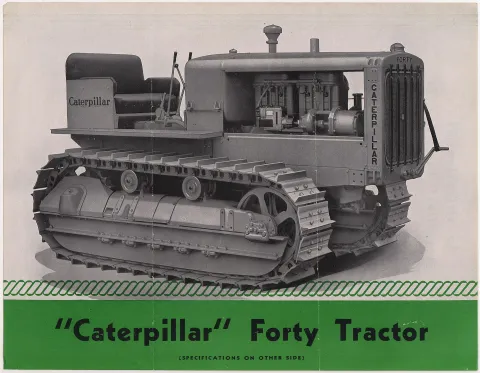
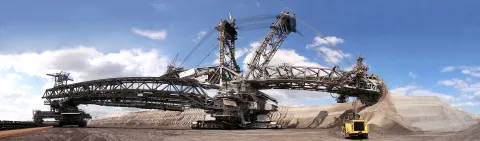
As diesel engines replaced steam in the 1920s and 30s, crawler-mounted cable shovels and draglines became the standard earthmovers. Companies such as Bucyrus, Marion and Ruston-Bucyrus built machines of all sizes, from small contractors' shovels to the giant draglines of strip mines.
The hydraulic revolution (1950s–1970s)
Hydraulic excavators began appearing after the Second World War. Early pioneers include the Italian Bruno Bonacina and the French company Poclain, whose hydraulic excavators were hugely successful in the 1960s. In Germany, Demag and Liebherr built early hydraulic models. Japan's Hitachi introduced its first all-hydraulic excavator in 1965, and the major Japanese makers quickly became world leaders.
By the 1970s, hydraulic excavators had overtaken cable machines in almost all construction work. Takeuchi built the first compact excavator in 1971, opening a new market.
Electronics and efficiency (1980s–2000s)
Electronic engine and pump control, load-sensing hydraulics and better cabs transformed productivity and comfort. Telematics became standard in the 2000s, starting with Komatsu's KOMTRAX in 2001. Zero-tail-swing designs and tiltrotators made excavators more versatile.
Smart machines (2010s–today)
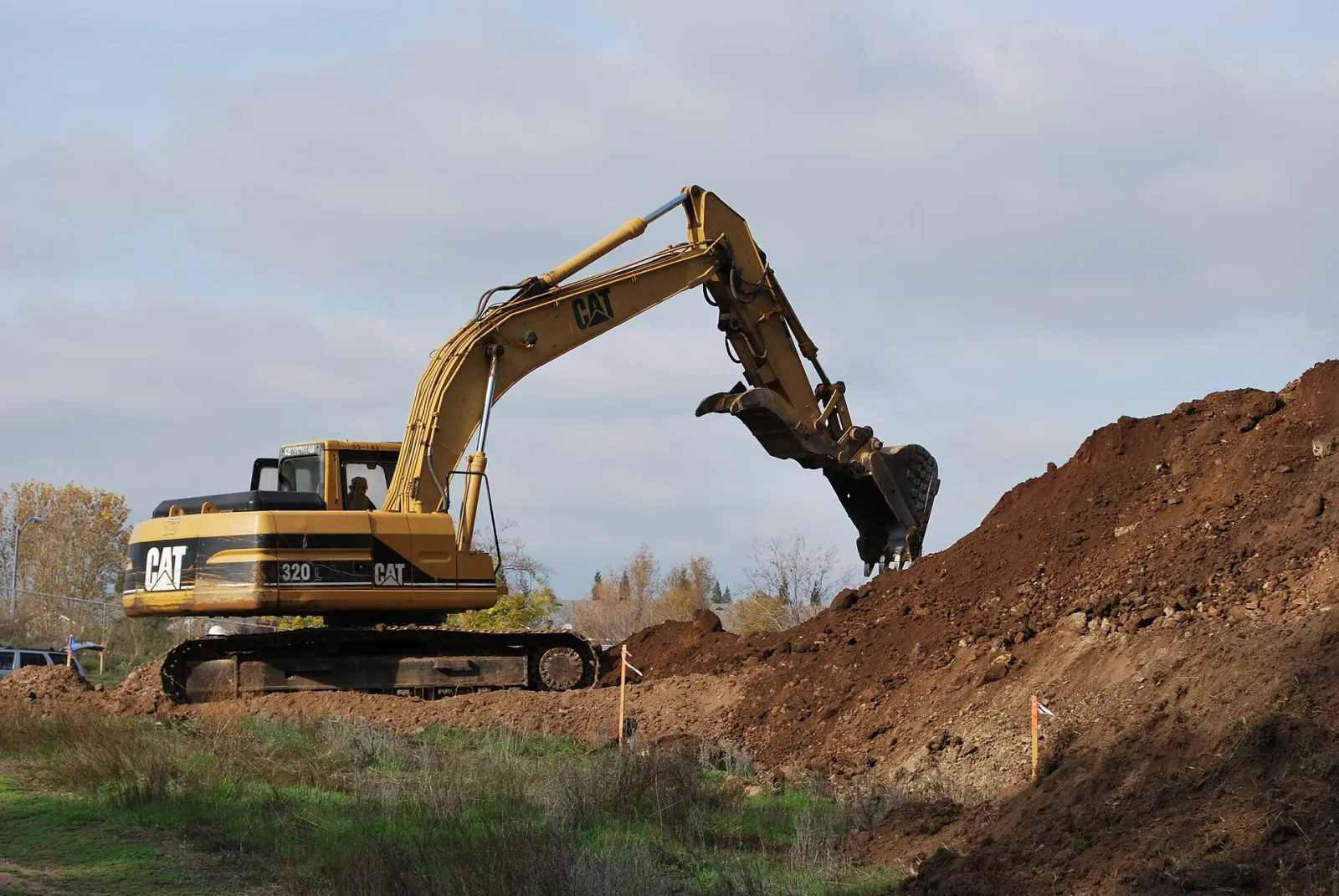
Factory-integrated machine control, such as Komatsu iMC (2013) and Cat Grade, allows excavators to dig to a digital design semi-automatically. Battery-electric mini excavators reached series production around 2019–2020. Remote operation and autonomy are now being tested on construction sites.
Explore today's excavators and mini excavators.