Crawler Undercarriage Wear: How to Measure It and Make It Last
The undercarriage can account for up to half of a crawler machine’s maintenance costs. Learn how track components wear, how to measure them and the operating habits that double their life.

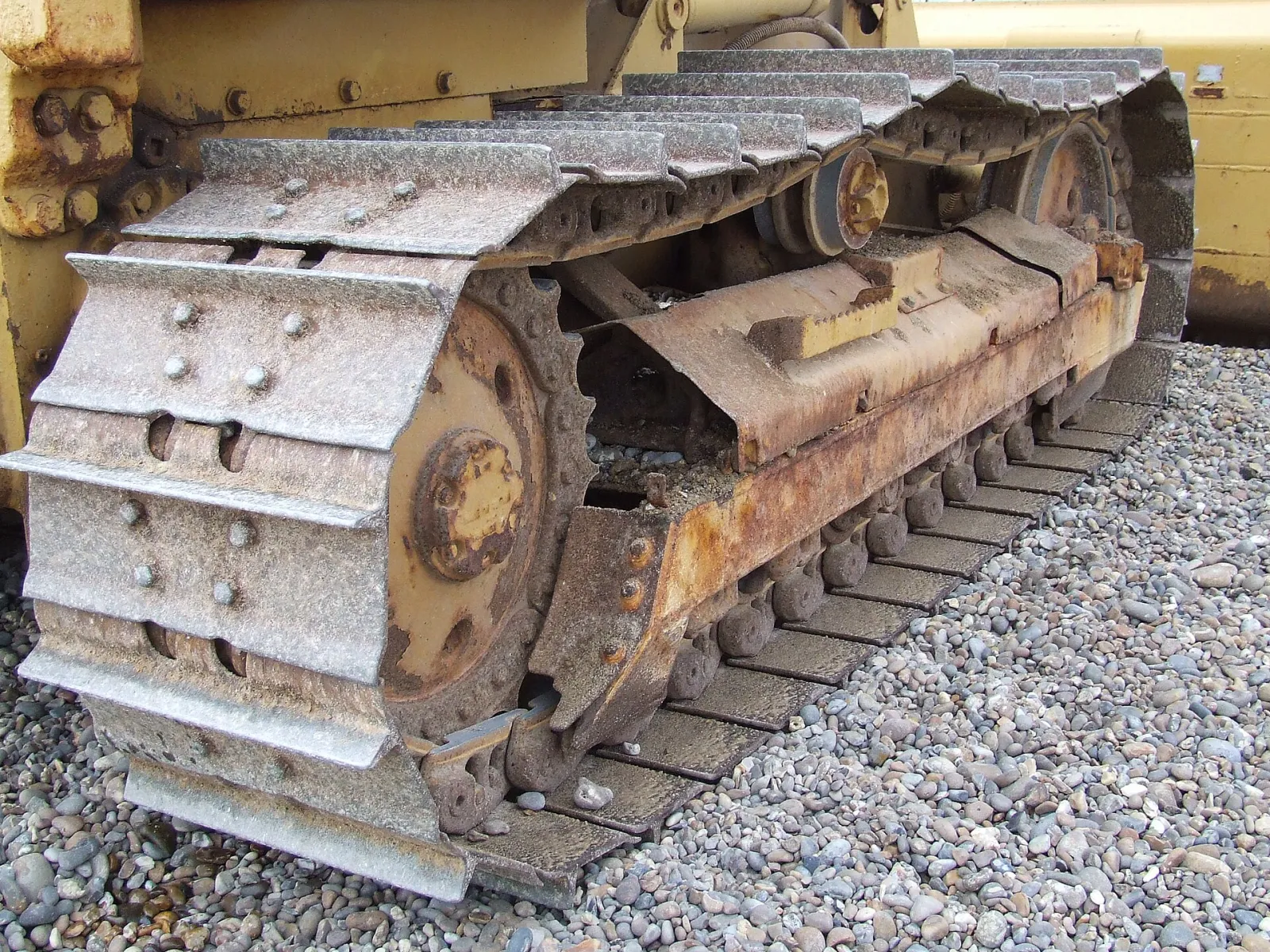
On a crawler excavator or dozer, the undercarriage (track chains, shoes, rollers, idlers and sprockets) is the single biggest wear cost. Manufacturers and dealers commonly estimate it at up to half of a crawler's total repair and maintenance budget. Managing it well is one of the most profitable things an owner can do.
The main components
- Track chain (links, pins and bushings): the "bicycle chain" of the machine.
- Track shoes with grousers for traction.
- Sprocket: the drive wheel at the rear.
- Front idler: guides the chain and adjusts tension.
- Track rollers (bottom) and carrier rollers (top): support the weight and guide the chain.
- Track adjuster with grease cylinder and recoil spring.
How undercarriage wears
- Pin and bushing wear lengthens the chain ("pitch extension"). The sprocket then no longer meshes properly, accelerating sprocket wear.
- Link rail wear reduces link height, lowering the machine closer to the ground.
- Roller and idler tread wear, often accelerated by misalignment.
- Grouser wear reduces traction.
How to measure wear
Dealers use ultrasonic gauges and calipers to measure:
- Bushing outside diameter
- Link height
- Track pitch over several links
- Roller and idler tread diameter
- Grouser height
Results are compared with new and wear-limit dimensions to give a percentage worn. Most manufacturers offer free or low-cost undercarriage inspections. Measure every 250–500 hours.
Habits that extend undercarriage life
- Keep tension correct. Over-tight tracks dramatically increase wear and fuel use; too loose and tracks can come off.
- Clean the undercarriage daily in sticky material. Packed mud acts like an over-tight track and adds abrasion.
- Minimise high-speed travel and reverse operation (especially on dozers).
- Alternate turning directions to even out wear.
- Work up and down slopes rather than across them.
- Choose the narrowest shoe that gives enough flotation: wide shoes increase stress on rocky ground.
- Avoid spinning tracks.
Repair options
- Turning pins and bushings (on older dry chains) can extend life.
- Rebuilding rollers and idlers.
- Sealed and lubricated (SALT) chains and rotating bushing systems last longer and are now standard on many machines.
When the undercarriage is near its wear limits, replace chains and sprockets together for best life.
Frequently asked questions
How long does an excavator undercarriage last?
Typically 4,000–6,000 hours in average conditions, but anywhere from under 2,000 hours in abrasive, high-impact work to over 8,000 hours in gentle applications with good management.