Comparison · Excavator
Caterpillar 323 vs Caterpillar 395
The Caterpillar 395 is about 270% heavier than the Caterpillar 323 (92,500 vs 25,000 kg), which usually means more stability and lifting capacity but higher transport weight.
The Caterpillar 395 has about 214% more engine power (405 kW (543 hp) vs 129 kW (173 hp)).
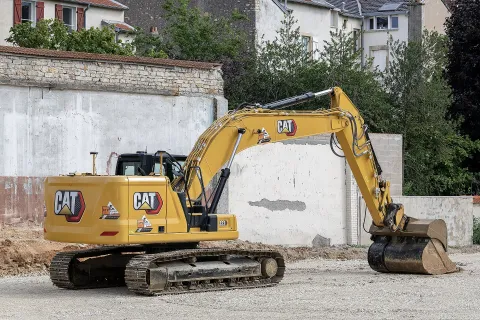
|
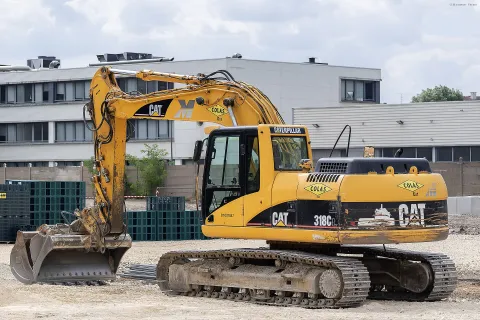
|
|
|---|---|---|
| Operating weight | 25,000 kg (55,100 lb) | 92,500 kg (203,900 lb) |
| Engine power | 129 kW (173 hp) | 405 kW (543 hp) |
| Net power (ISO 9249) | 128.5 kW (172 hp) Tier 4 Final / Stage V; 117 kW (157 hp) Tier 3 | — |
| Max. digging depth | 6.73 m (22 ft 1 in), R2.9 m stick | — |
| Max. reach at ground level | 9.87 m (32 ft 4 in) | — |
| Bucket digging force (ISO) | 140 kN (31,505 lbf); 152 kN (34,205 lbf) with Auto Dig Boost | — |
| Bucket capacity | up to ≈1.30–1.38 m³ (1.70–1.80 yd³) HD | — |
| Engine model | Cat C7.1, six cylinders | — |
| Displacement | 7.01 L (428 in³) | — |
| Gross power (ISO 14396) | 129.4 kW (174 hp) Tier 4 Final / Stage V | — |
| Emissions | US EPA Tier 4 Final / EU Stage V; Tier 3-equivalent version for less regulated markets | — |
| Renewable fuels | Biodiesel blends and 100% HVO renewable diesel | — |
| Main system max. flow | 429 L/min (113 gal/min), 2 × 215 L/min | — |
| Max. pressure – equipment | 35,000 kPa (5,075 psi); 38,000 kPa (5,510 psi) Heavy Lift / Auto Dig Boost | — |
| Max. pressure – travel / swing | 34,300 kPa (4,974 psi) / 27,500 kPa (3,998 psi) | — |
| Stick digging force (ISO) | 107 kN (24,050 lbf); 116 kN with boost, R2.9 m stick | — |
| Swing speed | 11.3 rpm | — |
| Max. swing torque | 82 kN·m (60,300 lbf·ft) | — |
| Max. travel speed | 5.7 km/h (3.5 mph) | — |
| Max. drawbar pull | 204 kN (45,861 lbf) | — |
| Max. cutting height | 9.45 m (31 ft 1 in) | — |
| Max. loading height | 6.48 m (21 ft 3 in) | — |
| Max. vertical wall digging depth | 5.62 m (18 ft 5 in) | — |
| Depth for 2.44 m (8 ft) level bottom | 6.56 m (21 ft 6 in) | — |
| Counterweight | 5,400 kg (11,900 lb) | — |
| Tail swing radius | 2.83 m (9 ft 3 in) | — |
| Cab height | 2.96 m (9 ft 9 in) | — |
| Track shoes | 600 mm (24 in) standard; 700 or 790 mm (28 or 31 in) optional | — |
| Fuel tank | 345 L (86.6 US gal) | — |
| Hydraulic system / tank | 234 L / 115 L (61.8 / 30.4 US gal) | — |
| Engine oil | 25 L (6.6 US gal) | — |
| Sound in cab (ISO 6396) | 70 dB(A) | — |
| Net power | — | ≈405 kW (543 hp) |
| Engine | — | Cat C18 |
| Strengths |
|
|
| Watch-outs |
|
|
| Full 323 review | Full 395 review |
Specifications are typical figures for standard configurations and may be measured differently by each manufacturer (for example net vs gross power). Always confirm with the manufacturer or dealer. Build another comparison.