Skid Steer vs Compact Track Loader: Which One Should You Buy?
Wheels or tracks? Skid steers and compact track loaders share attachments and controls, but differ in cost, traction, ground disturbance and running costs. Here is how to decide.

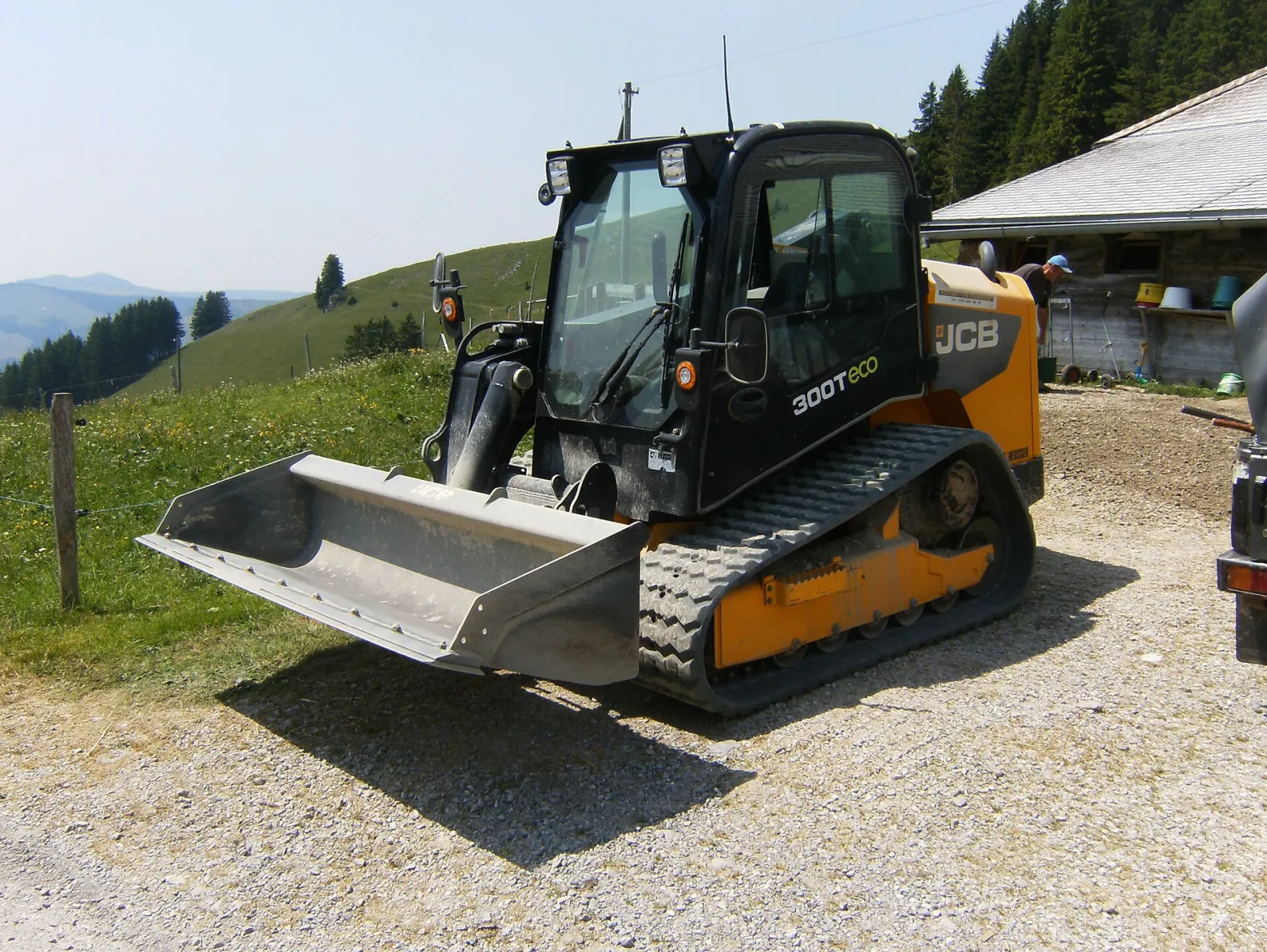
Skid steer loaders and compact track loaders (CTLs) look almost identical from the cab up. They use the same lift arms, quick-attach plate, hydraulics and attachments. The difference is what is underneath: four tyres or two rubber tracks. That one difference changes almost everything about where each machine works best.
Quick comparison
| Factor | Skid steer (wheels) | Compact track loader |
|---|---|---|
| Purchase price | Lower | Typically 15–30% higher |
| Ground pressure | High (tyres) | Low (3–5 psi / 20–35 kPa) |
| Traction in mud, snow, sand | Limited | Excellent |
| Speed on hard surfaces | Faster | Slower |
| Wear on concrete/asphalt | Tyres wear, but cheaper to replace | Tracks wear fast and cost more |
| Ride and grading | Bouncier | Smoother, better for finish grading |
| Rated operating capacity | 50% of tipping load | 35% of tipping load |
| Running costs | Lower | Higher (tracks, rollers, idlers) |
When a skid steer is the better choice
- Most of your work is on concrete, asphalt or compacted gravel: yards, farms, warehouses, demolition clean-up.
- You travel a lot around a large site.
- You want the lowest purchase and running costs.
- You do a lot of snow removal on paved surfaces (with good tyres or chains).
When a CTL is the better choice
- You work on soft ground: landscaping, new construction, wet or sandy soils.
- Ground damage matters, such as on lawns or finished grades.
- You do grading and site preparation where a smooth, level ride helps.
- You want to work through wet seasons with fewer lost days.
- You run demanding attachments like mulchers and need extra traction and stability.
Running costs
Rubber tracks typically last 1,200–2,000 hours and cost several thousand dollars per set. Undercarriage rollers, idlers and sprockets add to the bill. On abrasive surfaces, a CTL's undercarriage costs can be several times a skid steer's tyre costs. Tips to extend track life:
- Keep tracks correctly tensioned.
- Clean packed mud and debris from the undercarriage daily.
- Avoid sharp counter-rotation turns on abrasive surfaces.
- Minimise travel on asphalt and concrete.
What about capacity?
Do not compare ROC figures between wheels and tracks directly. Because of the different standards, a CTL with the same ROC as a skid steer usually has a much higher tipping load. Compare tipping loads if you want like-for-like.
Our verdict
If you mostly work on hard surfaces and want low costs, choose a skid steer. If you work on soil, grass or in wet conditions, a CTL will earn its premium through more working days and better results. Many contractors run both.
Popular models to compare: Bobcat S650, CASE SV340B, Bobcat T770, Cat 299D3 and Kubota SVL97-2.
Frequently asked questions
Can you put tracks on a skid steer?
Yes. Over-the-tyre (OTT) steel or rubber tracks can be fitted to many skid steers, improving traction. They are cheaper than a CTL but do not give the same ride, flotation or grading performance.
Is a CTL more stable than a skid steer?
Generally yes, because of its longer ground contact and lower centre of gravity, which is why it is rated at a lower percentage of its tipping load.