DPF Regeneration Explained: Passive, Active and Parked Regens on Heavy Equipment
Diesel particulate filters keep modern machines clean, but they need regular regeneration. Here is how passive, active and parked regens work and how to avoid clogged filters.

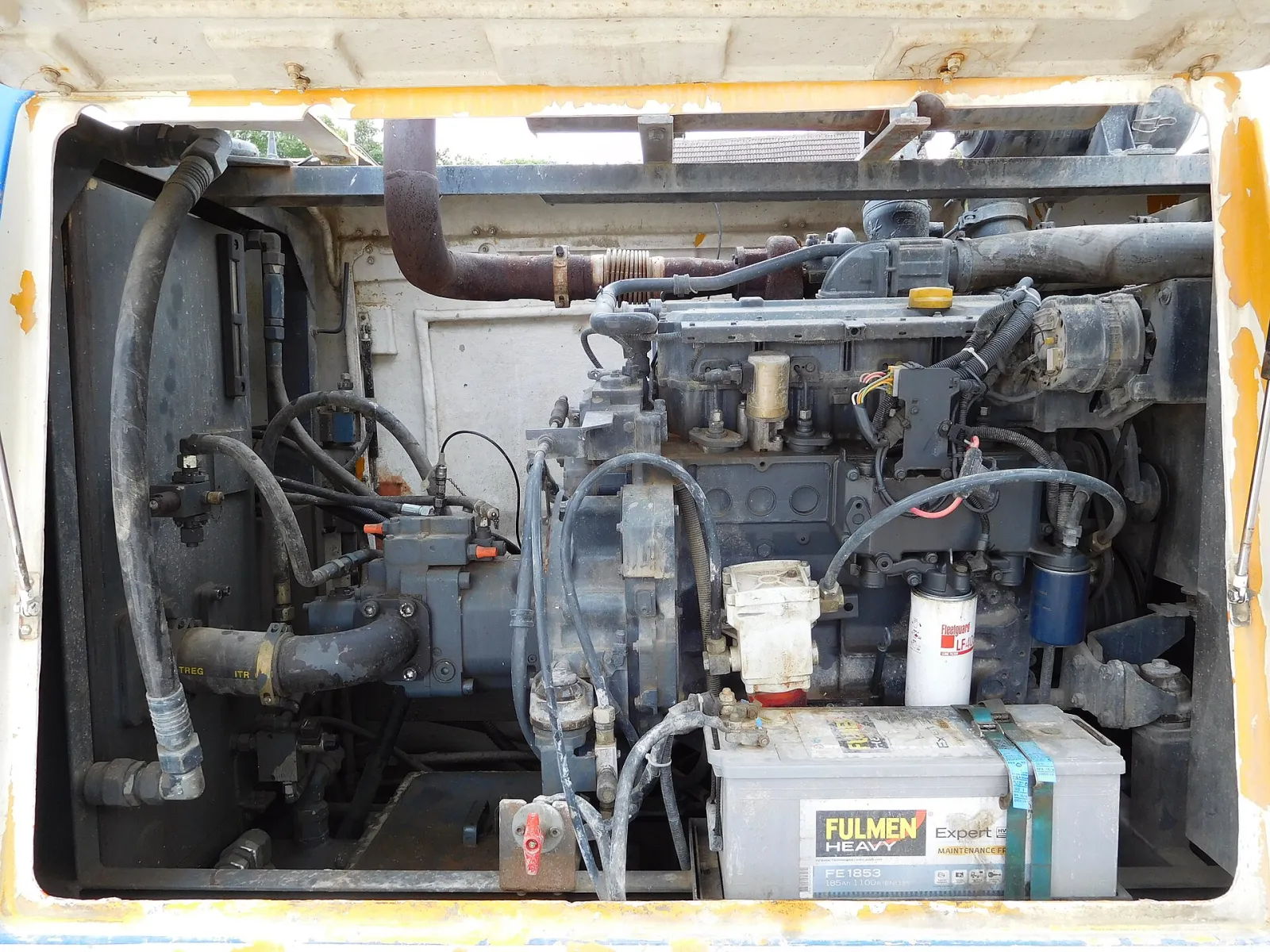
Almost every construction machine built for EU Stage V and many built for EPA Tier 4 Final carries a diesel particulate filter (DPF). The filter traps soot from the exhaust. Over time the soot must be burned off, a process called regeneration. Understanding how it works prevents most DPF problems.
How a DPF works
Exhaust passes through a ceramic honeycomb whose alternate channels are blocked, forcing gases through porous walls that trap soot particles. Sensors measure the pressure difference across the filter to estimate how much soot it holds.
Types of regeneration
- Passive regeneration happens automatically when exhaust is hot enough during normal heavy work. A diesel oxidation catalyst (DOC) upstream helps by converting NO to NO₂, which oxidises soot at lower temperatures.
- Active regeneration is triggered by the engine control unit when soot builds up: the engine raises exhaust temperature (for example by injecting extra fuel) while the machine keeps working.
- Parked (stationary) regeneration is requested on the display when active regens cannot finish. The machine must stand still at high idle for typically 20–60 minutes.
- Service regeneration or cleaning by a technician is needed if the filter is overloaded or full of ash.
Why DPFs clog
- Too much idling and light work: exhaust never gets hot enough.
- Interrupted regens: switching off the machine during a regen.
- Wrong engine oil: high-ash oil leaves incombustible ash in the filter. Use low-SAPS oil such as API CK-4 or ACEA E6/E9 as specified.
- Engine faults: leaking injectors, faulty EGR valves or turbo oil leaks increase soot.
Best practices
- Use auto-idle and auto-shutdown to cut pointless idling.
- Let active regens finish and perform parked regens when requested.
- Use the correct engine oil and fuel (ultra-low-sulphur diesel).
- Fix warning codes early.
- Plan ash cleaning at the interval in the manual (often several thousand hours).
More background in emissions standards explained.
Frequently asked questions
Can I drive or work during an active regeneration?
Yes. Active regeneration is designed to run while you work. Only parked regeneration requires the machine to stand still.
What happens if I ignore a DPF warning?
The engine will usually derate to protect itself, and an overloaded filter may need professional cleaning or replacement.